The realm of digital sound synthesis has witnessed remarkable advancements in recent years, with chip wavetable reconstruction emerging as one of the most fascinating frontiers. This technique breathes new life into vintage sound chips by extracting and manipulating their raw waveforms in ways that were unimaginable during their original heyday.
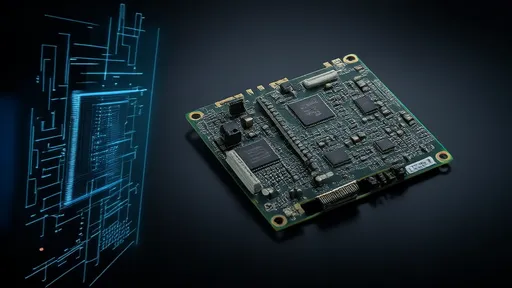
At its core, wavetable reconstruction involves analyzing the analog output of classic sound chips to reverse-engineer their waveform data. Modern developers are employing sophisticated algorithms to capture these waveforms at much higher resolutions than the original chips could output. What makes this process particularly intriguing is how it reveals the hidden sonic potential locked within these decades-old integrated circuits.
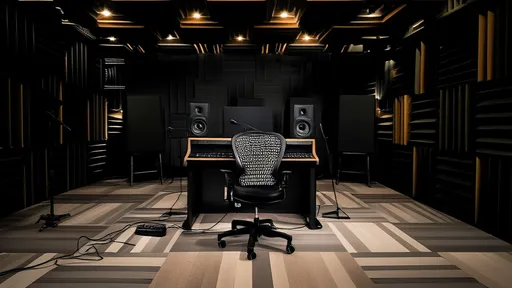
The methodology behind chip wavetable reconstruction combines elements of signal processing, vintage hardware expertise, and creative sound design. Specialists begin by feeding carefully crafted test signals through the target chip while recording its output with high-end audio interfaces. Advanced software then analyzes these recordings to reconstruct the chip's internal waveform tables with unprecedented accuracy.
One of the most exciting aspects of this technology is how it allows for the expansion of original wavetables. Where classic chips might have offered just 16 or 32 waveform slots, reconstructed versions can extend these into hundreds or even thousands of variations. This doesn't merely clone the original sounds - it unlocks entirely new sonic territories while maintaining the distinctive character of the vintage hardware.
The cultural impact of wavetable reconstruction cannot be overstated. For generations of musicians raised on chiptune and tracker music, these reconstructed sounds provide a bridge between nostalgic authenticity and modern production capabilities. Producers can now harness the instantly recognizable tones of legendary chips like the SID, YM2612, or NES APU while enjoying the flexibility of contemporary digital audio workstations.
Technical challenges abound in this field. Different chips require unique approaches depending on their architecture and signal paths. Some produce cleaner waveforms that are relatively easy to capture, while others output heavily filtered signals that demand complex reconstruction algorithms. The process often involves painstaking manual adjustments to account for hardware quirks and manufacturing variances between individual chips.
What truly sets modern wavetable reconstruction apart from simple emulation is the depth of analysis. Where emulators might approximate a chip's behavior mathematically, reconstruction aims to capture its actual sonic fingerprint. This includes subtle imperfections and nonlinearities that give each chip its distinctive voice. The result is a library of waveforms that sound remarkably authentic yet can be manipulated far beyond the original hardware's limitations.
The applications extend well beyond music production. Game developers are using reconstructed wavetables to create authentic retro soundtracks with modern production values. Audio plugin developers are packaging these sounds into versatile instruments that combine vintage character with contemporary features like polyphony, effects, and advanced modulation.
Looking ahead, the field of chip wavetable reconstruction continues to evolve rapidly. Machine learning techniques are being employed to automate parts of the analysis process while preserving the crucial human element of quality control. New visualization tools help engineers better understand the complex waveforms they're working with. There's even growing interest in applying these techniques to obscure or forgotten sound chips that never received proper documentation.
For electronic musicians and sound designers, this technology represents something truly special - the ability to harness the raw, digital soul of vintage sound chips without being constrained by their technical limitations. It's not about replacing the original hardware, but rather expanding the creative possibilities while maintaining respect for these iconic pieces of audio history.
The community surrounding chip wavetable reconstruction has grown into a vibrant ecosystem of developers, musicians, and hardware enthusiasts. Online forums buzz with technical discussions about optimal sampling techniques, while marketplaces offer both free and commercial reconstructed wavetable libraries. This collaborative spirit ensures the technology continues to advance while remaining accessible to creators at all levels.
As the tools become more sophisticated, we're seeing reconstructed wavetables implemented in increasingly creative ways. Some developers are blending waveforms from multiple chips to create hybrid sounds that never existed in the original hardware. Others are applying modern wavetable synthesis techniques to these vintage waveforms, creating evolving textures that maintain that classic digital character.
The preservation aspect of this work shouldn't be overlooked. As original chips age and become increasingly rare, wavetable reconstruction serves as a form of audio archaeology - capturing these unique sounds for future generations. Unlike simple sampling, the reconstructed wavetables maintain the flexibility and editability that makes them valuable creative tools rather than just historical artifacts.
From a technical perspective, the quality gap between reconstructed wavetables and the original hardware has narrowed dramatically. Early attempts often suffered from aliasing or lost some of the original's harmonic complexity, but current methods can capture waveforms with stunning accuracy. Some purists still prefer working with the actual chips, but for most practical applications, the reconstructed versions now offer comparable quality with far greater convenience.
What began as a niche technical exercise has blossomed into a full-fledged movement in digital audio. Chip wavetable reconstruction represents a perfect marriage of technical innovation and artistic passion - a way to honor the past while pushing sound design into exciting new territories. As the technology matures, we can expect even more groundbreaking applications that continue to redefine what's possible with these classic sound sources.

By /Aug 15, 2025
By /Aug 15, 2025
By /Aug 15, 2025
By /Aug 15, 2025
By /Aug 15, 2025

By /Aug 15, 2025
By /Aug 15, 2025
By /Aug 15, 2025
By /Aug 15, 2025
By /Aug 15, 2025
By /Aug 15, 2025
By /Aug 15, 2025

By /Aug 15, 2025

By /Aug 15, 2025

By /Aug 15, 2025

By /Aug 15, 2025

By /Aug 15, 2025

By /Aug 15, 2025

By /Aug 15, 2025
By /Aug 15, 2025
