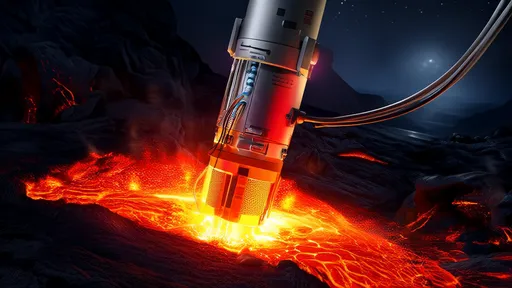
The abyssal depths of our oceans hide one of nature's most extraordinary energy exchange systems—a hidden web of microbial life thriving around hydrothermal vents. These fissures in the seafloor, spewing mineral-rich fluids at temperatures exceeding 400°C, host complex ecosystems fueled not by sunlight but by chemosynthesis. Recent discoveries have unveiled a startling phenomenon: a vast, interconnected "electron highway" where microbes shuttle electrical energy across species, rewriting our understanding of life in extreme environments.
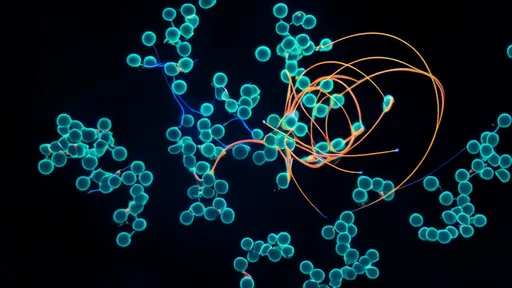
At the heart of this system are electrogenic bacteria—microbes capable of directly transferring electrons to other organisms or minerals. Unlike terrestrial ecosystems where energy flows through digestible carbon compounds, these deep-sea communities exploit the conductive properties of vent minerals like iron sulfides. Microbiologists have observed bacterial filaments forming living nanowires, stretching across micrometer-wide gaps to create biological circuits. This direct electron transfer bypasses traditional metabolic bottlenecks, allowing energy to flow with startling efficiency through the microbial collective.
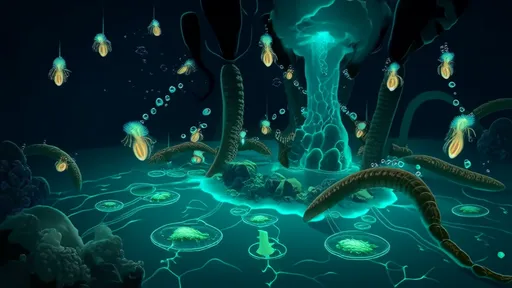
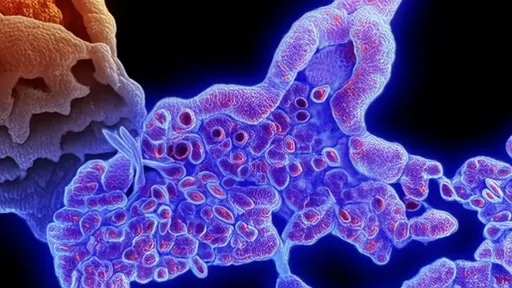
The scale of this energy network dwarfs initial scientific expectations. Sampling along the East Pacific Rise revealed conductive microbial mats spanning over 200 square meters—equivalent to two football fields—acting as natural batteries. Within these mats, distinct microbial species appear to specialize as "power plants," "transmission lines," and "energy consumers." Sulfide-oxidizing bacteria generate electrons from vent fluids, while methane-consuming archaea appear to function as terminal electron acceptors. Between them, cable bacteria literally align themselves end-to-end like biological extension cords, creating continuous conductive pathways through the sediment.
This discovery challenges fundamental ecological paradigms. The classic food web model collapses when organisms share energy not through consumption but through electrical handshakes. Researchers now suspect these networks buffer entire vent communities against the extreme fluctuations characteristic of hydrothermal systems. When vent flow diminishes, the microbial grid appears to maintain energy distribution, preventing ecosystem collapse during lean periods—a phenomenon dubbed "the deep-sea energy internet."
Technological implications are profound. The conductive proteins these microbes use outperform most human-made conductive polymers at high temperatures. Marine biotechnologists are reverse-engineering these biological nanowires for applications ranging from self-repairing deep-sea cables to revolutionary battery designs. Meanwhile, astrobiologists point to these findings as evidence that subsurface energy networks could sustain life on ice-covered moons like Europa, expanding the potential habitats for extraterrestrial life.
Yet mysteries abound. How do microbes prevent short circuits in this living electrical grid? What evolutionary pressures drove species to cooperate so intimately? Expedition teams are now deploying pressure-resistant sensors to map electron flows in real-time across vent fields. Each dive reveals new complexity—including the recent detection of viruses that may act as "energy thieves," hacking into the network to divert electrons for their replication.
As submersibles probe deeper into these alien landscapes, one truth emerges: the rules of energy exchange that govern surface life scarcely apply in the deep. Here, in perpetual darkness, evolution has crafted a power grid of astonishing sophistication—one that may hold secrets to sustainable energy technologies and the very origins of life itself.

By /Aug 14, 2025

By /Aug 14, 2025
By /Aug 14, 2025
By /Aug 14, 2025
By /Aug 14, 2025
By /Aug 14, 2025
By /Aug 14, 2025
By /Aug 14, 2025
By /Aug 14, 2025
By /Aug 14, 2025
By /Aug 14, 2025
By /Aug 14, 2025
By /Aug 14, 2025

By /Aug 14, 2025

By /Aug 14, 2025

By /Aug 14, 2025
By /Aug 14, 2025

By /Aug 14, 2025
By /Aug 14, 2025
By /Aug 14, 2025
