Stratospheric Life Pod: A Microbial Gene Bank at 20km Altitude

Aug 14, 2025 By

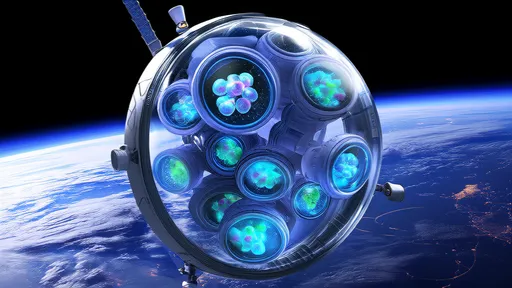
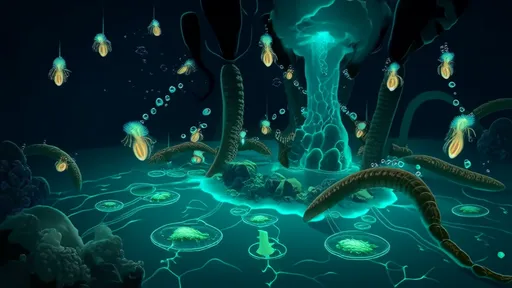
In the vast expanse of Earth's atmosphere, a team of scientists has uncovered a hidden reservoir of microbial life thriving at an altitude of 20 kilometers. This discovery, nestled within the stratosphere, challenges long-held assumptions about the limits of life on our planet. The so-called "Stratospheric Life Pod" represents not just a biological curiosity but a potential genetic goldmine that could reshape our understanding of microbial adaptation and evolution.

The stratosphere, once considered an inhospitable zone for life, has revealed itself to be anything but barren. At these dizzying heights, where temperatures plummet and ultraviolet radiation intensifies, resilient microorganisms have carved out an existence that defies conventional wisdom. These stratospheric dwellers possess genetic adaptations that allow them to withstand conditions that would prove lethal to most terrestrial life forms.

What makes these high-flying microbes particularly fascinating is their unique genetic signature. Early analyses suggest they represent a distinct evolutionary lineage, separate from their surface-dwelling counterparts. Their DNA contains sequences that code for novel proteins, some of which appear to be specialized for surviving in the thin, cold air of the upper atmosphere. Researchers speculate these genetic adaptations might hold the key to developing new biotechnologies.

The discovery came about through an ambitious atmospheric sampling program using specially designed high-altitude balloons. These scientific platforms carried collection devices capable of capturing and preserving microbial life without contamination from lower atmospheric layers. The sampling protocol was rigorous, involving multiple verification steps to ensure the organisms truly originated from the stratosphere rather than being carried up from below.

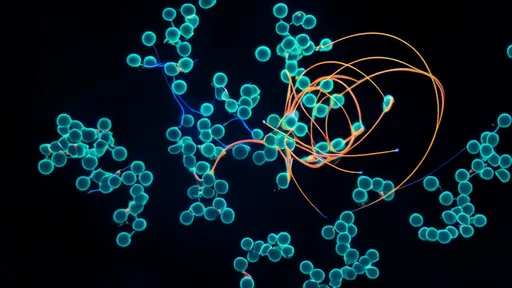
Among the most surprising findings was the diversity of life at such extreme heights. The microbial community includes not just bacteria but also archaea and fungal spores, forming a complex ecosystem suspended in the sky. Some species appear to be permanent residents of the upper atmosphere, while others might be transient visitors carried aloft by powerful storms or volcanic eruptions.

The implications of this stratospheric gene pool extend far beyond basic scientific curiosity. Pharmaceutical researchers are particularly interested in the unique enzymes these microbes produce. Early tests suggest some of these biological catalysts could have applications in medicine, particularly in developing new antibiotics or anti-cancer drugs. The extreme conditions of the stratosphere appear to have pushed these microorganisms to evolve biochemical solutions to problems that their ground-based relatives never encountered.

Climate scientists are also paying close attention to these atmospheric inhabitants. There's growing evidence that stratospheric microbes might play a previously unrecognized role in atmospheric chemistry and even cloud formation. Their metabolic activities could influence the concentration of various gases at high altitudes, potentially affecting everything from ozone levels to global climate patterns.

The discovery raises profound questions about how life spreads across our planet. Some researchers speculate that the stratosphere might serve as a global highway for microbial dispersal, allowing organisms to travel vast distances without ever touching the ground. This could explain how genetically similar microbes appear in geographically isolated locations. The stratospheric life pod might be part of a planetary-scale microbial network we're only beginning to understand.

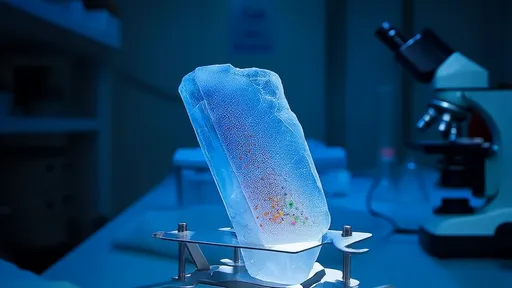
As exciting as these findings are, they also present significant technical challenges. Studying these organisms requires specialized equipment that can simulate stratospheric conditions in the laboratory. Maintaining the proper combination of low pressure, intense radiation, and extreme cold while keeping the microbes alive for study has pushed the boundaries of microbiological research techniques.

Looking ahead, scientists are planning more extensive stratospheric sampling missions. The next phase of research aims to map seasonal variations in the microbial population and investigate how these communities respond to environmental changes. There's particular interest in understanding how climate change might affect this high-altitude ecosystem, and conversely, how changes in the stratospheric microbiome might influence climate patterns at ground level.

This stratospheric gene bank represents one of the last unexplored frontiers of life on Earth. As we continue to probe its secrets, we may find that life's tenacity extends even further than we imagined. The microorganisms drifting at the edge of space remind us that our planet's biosphere is more extensive, more interconnected, and more surprising than we ever suspected.

The discovery of the stratospheric life pod opens new avenues for understanding the extreme limits of life's adaptability. These high-altitude microbes have evolved in isolation under conditions that mimic some aspects of extraterrestrial environments. Astrobiologists are particularly intrigued by what these organisms might tell us about the potential for life on other planets with thin atmospheres or extreme conditions.

Beyond their scientific value, these stratospheric microorganisms may hold practical benefits we're only beginning to appreciate. Industrial applications could range from novel enzymes for manufacturing processes to biological components for next-generation materials. The unique properties that allow these microbes to survive intense UV radiation could inspire new approaches to radiation protection in medicine and space travel.

Perhaps most importantly, this discovery forces us to reconsider our definitions of habitable zones. If life can persist in the harsh environment of the stratosphere, it suggests that we may need to expand our search parameters when looking for life elsewhere in the universe. The stratospheric life pod serves as a reminder that life finds a way even in the most unexpected places, constantly challenging our assumptions about where and how life can exist.

Recommend Posts
Science

Piezoelectric Smart Track: Train Vibration Energy Recovery System

By /Aug 14, 2025

The railway industry stands on the brink of a technological revolution as researchers and engineers explore innovative ways to harness energy from train vibrations. Among the most promising developments is the piezoelectric smart track system, designed to convert mechanical energy from passing trains into usable electricity. This cutting-edge approach not only promises to improve energy efficiency but also aligns with global sustainability goals by reducing reliance on non-renewable power sources.
Science

Urban Sky Corridors: 3D Air Routes for Drone Swarms

By /Aug 14, 2025

The concept of urban air corridors is no longer confined to the realm of science fiction. As cities grow denser and ground transportation becomes increasingly congested, the need for alternative mobility solutions has never been more pressing. Among the most promising developments is the emergence of drone swarms operating within structured three-dimensional air corridors. These aerial networks, often referred to as "city skyways," are poised to revolutionize urban logistics, emergency response, and even passenger transport.
Science

Autonomous Icebreaking Navigation: AI Ice Prediction for Arctic Routes

By /Aug 14, 2025

The once-impenetrable Arctic is cracking open. As climate change accelerates ice melt at an unprecedented rate, a new frontier of global shipping is emerging – and artificial intelligence has become its unlikely cartographer. What was once the exclusive domain of icebreakers and polar expeditions is now being transformed into a viable commercial route, thanks to AI-driven ice prediction systems that are redefining the art of polar navigation.
Science

Vacuum Capsule Logistics Network: Intercity Maglev Express Delivery System

By /Aug 14, 2025

The concept of a vacuum capsule logistics network, coupled with intercity maglev delivery systems, represents a futuristic leap in transportation technology. This innovative approach promises to revolutionize how goods and even people are transported across vast distances with unprecedented speed and efficiency. The idea, once confined to the realms of science fiction, is now inching closer to reality as advancements in magnetic levitation and vacuum tube technologies converge.
Science

Green Ammonia-Powered Mega-Ships: Chemical Hydrogen Storage for Zero-Carbon Shipping

By /Aug 14, 2025

The maritime industry, long criticized for its heavy reliance on fossil fuels, is now navigating toward a greener horizon. Among the most promising solutions emerging in this sector is the use of green ammonia as a fuel for massive cargo ships. This innovation not only addresses the urgent need to decarbonize global shipping but also leverages ammonia’s unique properties as an efficient carrier of hydrogen—the clean energy source of the future.
Science

Stratospheric Life Pod: A Microbial Gene Bank at 20km Altitude

By /Aug 14, 2025

In the vast expanse of Earth's atmosphere, a team of scientists has uncovered a hidden reservoir of microbial life thriving at an altitude of 20 kilometers. This discovery, nestled within the stratosphere, challenges long-held assumptions about the limits of life on our planet. The so-called "Stratospheric Life Pod" represents not just a biological curiosity but a potential genetic goldmine that could reshape our understanding of microbial adaptation and evolution.
Science

Desert Biomimetic Water Collection: Microdroplet Directed Transport Inspired by Cactus Spines

By /Aug 14, 2025

The harsh desert environment seems an unlikely place to find sophisticated water collection systems, yet nature has engineered remarkable solutions in the most arid landscapes. Among these biological marvels, the humble cactus stands out with an extraordinary ability to harvest moisture from thin air. Recent scientific investigations into the microstructure of cactus spines reveal a complex mechanism for directional water transport that could revolutionize our approach to water scarcity.
Science

Volcanic Lava Probe: Carbide Sensor for Magma Monitoring

By /Aug 14, 2025

In the relentless pursuit of understanding Earth's most volatile phenomena, volcanologists have made a groundbreaking leap with the deployment of silicon carbide (SiC) sensors in active lava flows. These rugged probes, capable of surviving temperatures exceeding 1,600°C, are transmitting unprecedented real-time data from the heart of molten rock systems. Unlike traditional monitoring methods that rely on surface observations or indirect measurements, these advanced sensors plunge directly into the fiery crucible where most instruments would vaporize within seconds.
Science

Subglacial River Networks: Sonar Mapping of Liquid Water at the Base of the Ice Sheet

By /Aug 14, 2025

The icy surface of Antarctica has long concealed one of the planet's most enigmatic hydrological systems. Recent advancements in ice-penetrating sonar technology have unveiled a sprawling network of liquid waterways beneath the continent's massive ice sheets, challenging previous assumptions about the frozen landscape. These subglacial rivers, some stretching hundreds of kilometers, flow between bedrock and ice in complete darkness, creating a dynamic environment that influences ice sheet movement and potentially harbors unique microbial life.
Science

Deep-Sea Electronic Chain: Hydrothermal Vent Microorganism Energy Web

By /Aug 14, 2025

The abyssal depths of our oceans hide one of nature's most extraordinary energy exchange systems—a hidden web of microbial life thriving around hydrothermal vents. These fissures in the seafloor, spewing mineral-rich fluids at temperatures exceeding 400°C, host complex ecosystems fueled not by sunlight but by chemosynthesis. Recent discoveries have unveiled a startling phenomenon: a vast, interconnected "electron highway" where microbes shuttle electrical energy across species, rewriting our understanding of life in extreme environments.
Science

Migratory Bird Quantum Compass: Cryptochrome Magnetic Sensing Mechanism

By /Aug 14, 2025

The mystery of avian migration has long fascinated scientists, particularly how birds navigate across vast distances with astonishing precision. Recent breakthroughs in quantum biology have shed light on a remarkable mechanism: the cryptochrome-based magnetic compass in migratory birds. This quantum-assisted sensory system, often dubbed the "quantum compass," operates at the intersection of biophysics and molecular chemistry, revealing nature’s ingenuity at the smallest scales.
Science

Neuromorphic Vision: Retina-Inspired Spiking Chip

By /Aug 14, 2025

In the rapidly evolving field of artificial intelligence, neuromorphic engineering has emerged as a groundbreaking approach to mimicking biological neural systems. Among its most promising applications is the development of retina-inspired spiking vision chips, which are poised to revolutionize everything from robotics to medical imaging. These bio-inspired sensors don't just capture images - they process visual information in ways that fundamentally differ from conventional cameras, offering unprecedented efficiency and speed.
Science

Asteroid Amino Acid Chirality: The Cosmic Bias in the Origin of Life

By /Aug 14, 2025

The discovery of amino acids in meteorites has long fascinated scientists studying the origins of life. These organic molecules, the building blocks of proteins, exhibit a curious asymmetry known as chirality—a property that could hold the key to understanding how life emerged on Earth. Recent research suggests that the preference for left-handed amino acids in terrestrial life may not be a random occurrence but rather a bias imprinted by extraterrestrial influences.
Science

Acoustic Archaeology Project: Double Tone Restoration of the Zeng Hou Yi Chime Bells

By /Aug 14, 2025

In the quiet halls of the Hubei Provincial Museum, a set of ancient bronze bells whispers secrets from China’s Warring States period. These are the famed Zeng Houyi Bells, a monumental chime dating back over 2,400 years. What makes them extraordinary isn’t just their pristine preservation or intricate craftsmanship—it’s their ability to produce two distinct tones from a single bell, a technological marvel that predates modern acoustics by millennia. Recent advances in acoustic archaeology have allowed researchers to decode this ancient sonic engineering, offering new insights into the musical sophistication of early Chinese civilization.
Science

Anesthesia in the Stone Age: Poppy Residues in Skull Surgery

By /Aug 14, 2025

The practice of surgery dates back much further than modern medicine would suggest. Recent archaeological discoveries have shed light on the sophisticated medical knowledge possessed by Stone Age communities, particularly in the realm of cranial surgery. Among the most startling revelations is the detection of opium residues in the bones of patients who underwent trepanation—a procedure involving the drilling or scraping of holes into the skull. This finding suggests that early humans may have used psychoactive substances to alleviate pain during these invasive operations.
Science

Mathematical Pandemic Simulation: Social Network Topology Transmission Model

By /Aug 14, 2025

The rapid spread of infectious diseases has long been a subject of intense scientific scrutiny, but the COVID-19 pandemic brought into sharp focus the critical role of human interactions in disease transmission. Among the most promising tools for understanding these dynamics are mathematical models that simulate how diseases propagate through social networks. These models, often rooted in graph theory and network science, provide a framework for predicting outbreak trajectories and evaluating the efficacy of various intervention strategies.
Science

Newly Generated Title: Evidence of Dinosaurs Being Warm-Blooded: 3D Reconstruction of Bone Tissue Microvasculature"

By /Aug 14, 2025

For over a century, paleontologists have debated whether dinosaurs were cold-blooded like modern reptiles or warm-blooded like birds and mammals. A groundbreaking new study using advanced imaging techniques to reconstruct the three-dimensional microvasculature of dinosaur bone tissue may finally settle this heated scientific dispute. The research, published in Nature, provides compelling evidence that at least some dinosaurs maintained elevated metabolic rates comparable to modern warm-blooded animals.
Science

Neanderthal Dentistry: Resin Fillings for Primitive Tooth Decay

By /Aug 14, 2025

The discovery of dental interventions among Neanderthals has long fascinated archaeologists and anthropologists. Recent findings suggest that these ancient hominins not only suffered from tooth decay but may have also attempted rudimentary dental treatments, including the use of resin as a filling material. This revelation challenges the conventional view of Neanderthals as primitive beings with limited cognitive abilities, instead painting a picture of a species capable of innovative problem-solving in the face of dental distress.
Science

Historical Microplastics in Ice Cores: Pre-industrial Pollution Baseline

By /Aug 14, 2025

The discovery of microplastics embedded in ancient ice cores has sent shockwaves through the scientific community, forcing us to reconsider the very timeline of human pollution. For decades, we've operated under the assumption that plastic contamination began in earnest with the post-World War II polymer boom. But the ice, that silent archivist of Earth's atmospheric history, tells a more complicated story - one that predates our modern plastic addiction by centuries.
Science

Resurrection of Amber-Entombed Paleopathogens: Eocene Insect Viruses

By /Aug 14, 2025

In a groundbreaking scientific endeavor, researchers have successfully revived an ancient virus trapped in amber for millions of years. This remarkable discovery, involving an Eocene-era insect virus, opens new frontiers in paleovirology and challenges our understanding of pathogen evolution. The team extracted viral particles from a 44-million-year-old mosquito preserved in Baltic amber, marking the first time scientists have recovered and reactivated such an ancient pathogen.