The maritime industry, long criticized for its heavy reliance on fossil fuels, is now navigating toward a greener horizon. Among the most promising solutions emerging in this sector is the use of green ammonia as a fuel for massive cargo ships. This innovation not only addresses the urgent need to decarbonize global shipping but also leverages ammonia’s unique properties as an efficient carrier of hydrogen—the clean energy source of the future.
Green ammonia is produced using renewable energy to power the Haber-Bosch process, which combines nitrogen from the air with hydrogen derived from water electrolysis. Unlike conventional ammonia production, which emits significant amounts of CO2, this method is entirely carbon-free. The resulting ammonia can then be used directly as a fuel or cracked back into hydrogen when needed, making it a versatile medium for energy storage and transportation. For the shipping industry, this dual functionality is a game-changer.
The appeal of ammonia lies in its high energy density and ease of storage. Unlike hydrogen, which requires cryogenic temperatures or high-pressure tanks, ammonia can be stored as a liquid at moderate pressures or even at ambient temperatures under slight pressurization. This makes it far more practical for use in large-scale applications like transoceanic shipping. Moreover, ammonia’s existing infrastructure—thanks to its widespread use in fertilizers—provides a head start in scaling up its adoption as a marine fuel.
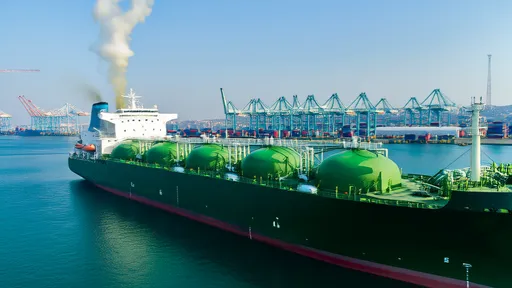
Several pioneering projects are already underway to test ammonia’s viability in powering massive vessels. Companies like MAN Energy Solutions and Wärtsilä are developing ammonia-compatible engines, while shipping giants such as Maersk are investing in ammonia-fueled prototypes. These initiatives are critical in proving that zero-emission shipping is not just a theoretical possibility but an imminent reality. Early trials suggest that ammonia-powered engines can achieve performance comparable to traditional diesel engines, albeit with some technical challenges still to overcome.
One of the primary hurdles is ammonia’s toxicity, which demands stringent safety protocols for handling and storage. Leaks could pose serious health risks to crew members and port workers, necessitating advanced detection systems and fail-safe mechanisms. Additionally, burning ammonia in internal combustion engines can produce nitrogen oxides (NOx), another potent greenhouse gas. However, engineers are optimistic that these issues can be mitigated through catalytic converters and optimized combustion techniques.
Beyond the technical aspects, the shift to green ammonia hinges on the availability of renewable energy to produce it at scale. Countries with abundant wind, solar, or hydropower resources are poised to become key players in this new energy ecosystem. For instance, Australia and Chile are exploring large-scale green ammonia projects, aiming to export the fuel to shipping hubs worldwide. This could reshape global energy trade dynamics, creating new alliances centered around clean energy rather than oil.
The economic case for green ammonia is also strengthening. As carbon pricing mechanisms gain traction and subsidies for fossil fuels decline, the cost gap between conventional and green fuels is narrowing. Analysts predict that within a decade, green ammonia could become cost-competitive with heavy fuel oil, especially as production scales up and electrolyzer costs continue to fall. For shipping companies, this transition isn’t just about regulatory compliance—it’s about future-proofing their operations in an increasingly carbon-constrained world.
Regulatory frameworks are evolving to support this shift. The International Maritime Organization (IMO) has set ambitious targets to halve shipping emissions by 2050, and green ammonia is expected to play a pivotal role in meeting these goals. Meanwhile, regional initiatives like the European Union’s Emissions Trading System (ETS) are adding financial pressure to adopt cleaner fuels. These policies are sending a clear signal to the industry: the era of fossil-fueled shipping is coming to an end.
Despite the momentum, skeptics argue that ammonia is just one piece of the puzzle. Batteries, hydrogen fuel cells, and even wind-assisted propulsion are also vying for a place in the future of shipping. Yet, for long-distance voyages requiring high energy density, ammonia stands out as the most viable option. Its ability to act as a chemical battery for hydrogen—storing and releasing energy on demand—gives it a unique advantage over other alternatives.
The journey toward zero-carbon shipping is fraught with challenges, but the potential rewards are immense. By harnessing green ammonia, the maritime industry could drastically reduce its environmental footprint while maintaining the efficiency and reliability that global trade depends on. As pilot projects transition into commercial deployments, the vision of emission-free oceans is inching closer to reality. The question is no longer if green ammonia will power the ships of the future, but how soon.

By /Aug 14, 2025

By /Aug 14, 2025
By /Aug 14, 2025
By /Aug 14, 2025
By /Aug 14, 2025
By /Aug 14, 2025

By /Aug 14, 2025
By /Aug 14, 2025
By /Aug 14, 2025

By /Aug 14, 2025

By /Aug 14, 2025

By /Aug 14, 2025

By /Aug 14, 2025

By /Aug 14, 2025

By /Aug 14, 2025

By /Aug 14, 2025

By /Aug 14, 2025

By /Aug 14, 2025

By /Aug 14, 2025

By /Aug 14, 2025
