Neuromorphic Vision: Retina-Inspired Spiking Chip

Aug 14, 2025 By

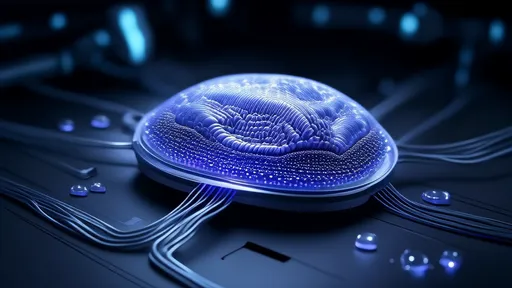
In the rapidly evolving field of artificial intelligence, neuromorphic engineering has emerged as a groundbreaking approach to mimicking biological neural systems. Among its most promising applications is the development of retina-inspired spiking vision chips, which are poised to revolutionize everything from robotics to medical imaging. These bio-inspired sensors don't just capture images - they process visual information in ways that fundamentally differ from conventional cameras, offering unprecedented efficiency and speed.

The human retina has long fascinated scientists with its elegant efficiency. Unlike digital cameras that capture frames at fixed intervals, the retina processes visual information continuously through specialized neurons that fire only when they detect meaningful changes in the environment. This event-driven approach eliminates redundant data processing and enables lightning-fast responses to visual stimuli. Neuromorphic engineers have spent decades trying to replicate this biological marvel in silicon.

How Retina-Inspired Chips Differ from Traditional Vision Systems

Traditional computer vision systems rely on sequentially capturing and processing full image frames, regardless of whether the scene has changed. This approach generates massive amounts of redundant data and requires significant computational power for processing. In contrast, neuromorphic vision sensors like the retina-inspired spiking chips output sparse, asynchronous spikes only when pixels detect changes in light intensity. This event-based operation closely mimics the biological retina's functionality.

The implications of this difference are profound. Where a conventional camera might capture 60 identical frames of a static scene, a neuromorphic vision sensor would remain silent until something actually moves or changes. This results in tremendous power savings and reduces data processing requirements by orders of magnitude. Early prototypes have demonstrated power consumption as low as a few milliwatts while maintaining microsecond-level latency - performance metrics that dwarf traditional vision systems.

Breakthroughs in Retinal Chip Architecture

Recent advances in semiconductor technology have enabled researchers to create increasingly sophisticated retina-like chips. One notable development comes from researchers who have successfully replicated the retina's layered structure in silicon. These chips typically contain photodetectors that mimic retinal photoreceptors, connected to networks of artificial neurons that approximate the behavior of retinal ganglion cells.

The most advanced prototypes now incorporate adaptive mechanisms similar to those found in biological vision. These include automatic gain control that adjusts to different lighting conditions, motion-sensitive pathways that prioritize moving objects, and even rudimentary forms of edge detection happening at the sensor level. Some research groups have gone further by implementing the retina's center-surround receptive fields, which enhance contrast detection and motion sensitivity.

Applications Transforming Multiple Industries

The unique properties of retina-inspired vision chips are finding applications across diverse fields. In autonomous vehicles, these sensors provide ultra-low-latency obstacle detection while consuming minimal power. Robotics researchers are integrating them into systems that require rapid visual feedback, such as drone navigation and industrial automation. The medical field sees potential in retinal prosthetics and new diagnostic tools that could interface more naturally with the human visual system.

Perhaps one of the most exciting applications is in always-on surveillance and IoT devices. The combination of low power consumption and event-based operation means these sensors can operate for years on small batteries, only activating higher-level processing when something meaningful occurs. This could enable a new generation of smart sensors that maintain visual awareness without compromising privacy or requiring massive data storage.

Challenges and Future Directions

Despite their promise, retina-inspired neuromorphic chips face several challenges before achieving widespread adoption. The event-based output requires entirely new algorithms and processing pipelines, as traditional computer vision techniques don't translate well to sparse, asynchronous data streams. There's also the challenge of manufacturing consistency - biological systems tolerate variability well, but silicon implementations often require precise calibration.

Looking ahead, researchers are working on several fronts to advance this technology. Some are exploring three-dimensional chip architectures that could better emulate the retina's layered structure. Others are investigating hybrid approaches that combine the best aspects of frame-based and event-based vision. Perhaps most ambitiously, several groups are working toward full-system implementations that would integrate these bio-inspired sensors with neuromorphic processors, creating complete vision systems that operate on principles fundamentally different from conventional approaches.

As the field matures, retina-inspired neuromorphic vision chips may well redefine how machines see and interpret the visual world. By learning from millions of years of biological evolution, engineers are creating sensing technologies that are not just faster and more efficient, but in some ways more intelligent about what deserves attention. The implications for AI, robotics, and human-machine interfaces could be profound - we may be witnessing the dawn of a new era in machine vision.

Recommend Posts
Science

Piezoelectric Smart Track: Train Vibration Energy Recovery System

By /Aug 14, 2025

The railway industry stands on the brink of a technological revolution as researchers and engineers explore innovative ways to harness energy from train vibrations. Among the most promising developments is the piezoelectric smart track system, designed to convert mechanical energy from passing trains into usable electricity. This cutting-edge approach not only promises to improve energy efficiency but also aligns with global sustainability goals by reducing reliance on non-renewable power sources.
Science

Urban Sky Corridors: 3D Air Routes for Drone Swarms

By /Aug 14, 2025

The concept of urban air corridors is no longer confined to the realm of science fiction. As cities grow denser and ground transportation becomes increasingly congested, the need for alternative mobility solutions has never been more pressing. Among the most promising developments is the emergence of drone swarms operating within structured three-dimensional air corridors. These aerial networks, often referred to as "city skyways," are poised to revolutionize urban logistics, emergency response, and even passenger transport.
Science

Autonomous Icebreaking Navigation: AI Ice Prediction for Arctic Routes

By /Aug 14, 2025

The once-impenetrable Arctic is cracking open. As climate change accelerates ice melt at an unprecedented rate, a new frontier of global shipping is emerging – and artificial intelligence has become its unlikely cartographer. What was once the exclusive domain of icebreakers and polar expeditions is now being transformed into a viable commercial route, thanks to AI-driven ice prediction systems that are redefining the art of polar navigation.
Science

Vacuum Capsule Logistics Network: Intercity Maglev Express Delivery System

By /Aug 14, 2025

The concept of a vacuum capsule logistics network, coupled with intercity maglev delivery systems, represents a futuristic leap in transportation technology. This innovative approach promises to revolutionize how goods and even people are transported across vast distances with unprecedented speed and efficiency. The idea, once confined to the realms of science fiction, is now inching closer to reality as advancements in magnetic levitation and vacuum tube technologies converge.
Science

Green Ammonia-Powered Mega-Ships: Chemical Hydrogen Storage for Zero-Carbon Shipping

By /Aug 14, 2025

The maritime industry, long criticized for its heavy reliance on fossil fuels, is now navigating toward a greener horizon. Among the most promising solutions emerging in this sector is the use of green ammonia as a fuel for massive cargo ships. This innovation not only addresses the urgent need to decarbonize global shipping but also leverages ammonia’s unique properties as an efficient carrier of hydrogen—the clean energy source of the future.
Science

Stratospheric Life Pod: A Microbial Gene Bank at 20km Altitude

By /Aug 14, 2025

In the vast expanse of Earth's atmosphere, a team of scientists has uncovered a hidden reservoir of microbial life thriving at an altitude of 20 kilometers. This discovery, nestled within the stratosphere, challenges long-held assumptions about the limits of life on our planet. The so-called "Stratospheric Life Pod" represents not just a biological curiosity but a potential genetic goldmine that could reshape our understanding of microbial adaptation and evolution.
Science

Desert Biomimetic Water Collection: Microdroplet Directed Transport Inspired by Cactus Spines

By /Aug 14, 2025

The harsh desert environment seems an unlikely place to find sophisticated water collection systems, yet nature has engineered remarkable solutions in the most arid landscapes. Among these biological marvels, the humble cactus stands out with an extraordinary ability to harvest moisture from thin air. Recent scientific investigations into the microstructure of cactus spines reveal a complex mechanism for directional water transport that could revolutionize our approach to water scarcity.
Science

Volcanic Lava Probe: Carbide Sensor for Magma Monitoring

By /Aug 14, 2025

In the relentless pursuit of understanding Earth's most volatile phenomena, volcanologists have made a groundbreaking leap with the deployment of silicon carbide (SiC) sensors in active lava flows. These rugged probes, capable of surviving temperatures exceeding 1,600°C, are transmitting unprecedented real-time data from the heart of molten rock systems. Unlike traditional monitoring methods that rely on surface observations or indirect measurements, these advanced sensors plunge directly into the fiery crucible where most instruments would vaporize within seconds.
Science

Subglacial River Networks: Sonar Mapping of Liquid Water at the Base of the Ice Sheet

By /Aug 14, 2025

The icy surface of Antarctica has long concealed one of the planet's most enigmatic hydrological systems. Recent advancements in ice-penetrating sonar technology have unveiled a sprawling network of liquid waterways beneath the continent's massive ice sheets, challenging previous assumptions about the frozen landscape. These subglacial rivers, some stretching hundreds of kilometers, flow between bedrock and ice in complete darkness, creating a dynamic environment that influences ice sheet movement and potentially harbors unique microbial life.
Science

Deep-Sea Electronic Chain: Hydrothermal Vent Microorganism Energy Web

By /Aug 14, 2025

The abyssal depths of our oceans hide one of nature's most extraordinary energy exchange systems—a hidden web of microbial life thriving around hydrothermal vents. These fissures in the seafloor, spewing mineral-rich fluids at temperatures exceeding 400°C, host complex ecosystems fueled not by sunlight but by chemosynthesis. Recent discoveries have unveiled a startling phenomenon: a vast, interconnected "electron highway" where microbes shuttle electrical energy across species, rewriting our understanding of life in extreme environments.
Science

Migratory Bird Quantum Compass: Cryptochrome Magnetic Sensing Mechanism

By /Aug 14, 2025

The mystery of avian migration has long fascinated scientists, particularly how birds navigate across vast distances with astonishing precision. Recent breakthroughs in quantum biology have shed light on a remarkable mechanism: the cryptochrome-based magnetic compass in migratory birds. This quantum-assisted sensory system, often dubbed the "quantum compass," operates at the intersection of biophysics and molecular chemistry, revealing nature’s ingenuity at the smallest scales.
Science

Neuromorphic Vision: Retina-Inspired Spiking Chip

By /Aug 14, 2025

In the rapidly evolving field of artificial intelligence, neuromorphic engineering has emerged as a groundbreaking approach to mimicking biological neural systems. Among its most promising applications is the development of retina-inspired spiking vision chips, which are poised to revolutionize everything from robotics to medical imaging. These bio-inspired sensors don't just capture images - they process visual information in ways that fundamentally differ from conventional cameras, offering unprecedented efficiency and speed.
Science

Asteroid Amino Acid Chirality: The Cosmic Bias in the Origin of Life

By /Aug 14, 2025

The discovery of amino acids in meteorites has long fascinated scientists studying the origins of life. These organic molecules, the building blocks of proteins, exhibit a curious asymmetry known as chirality—a property that could hold the key to understanding how life emerged on Earth. Recent research suggests that the preference for left-handed amino acids in terrestrial life may not be a random occurrence but rather a bias imprinted by extraterrestrial influences.
Science

Acoustic Archaeology Project: Double Tone Restoration of the Zeng Hou Yi Chime Bells

By /Aug 14, 2025

In the quiet halls of the Hubei Provincial Museum, a set of ancient bronze bells whispers secrets from China’s Warring States period. These are the famed Zeng Houyi Bells, a monumental chime dating back over 2,400 years. What makes them extraordinary isn’t just their pristine preservation or intricate craftsmanship—it’s their ability to produce two distinct tones from a single bell, a technological marvel that predates modern acoustics by millennia. Recent advances in acoustic archaeology have allowed researchers to decode this ancient sonic engineering, offering new insights into the musical sophistication of early Chinese civilization.
Science

Anesthesia in the Stone Age: Poppy Residues in Skull Surgery

By /Aug 14, 2025

The practice of surgery dates back much further than modern medicine would suggest. Recent archaeological discoveries have shed light on the sophisticated medical knowledge possessed by Stone Age communities, particularly in the realm of cranial surgery. Among the most startling revelations is the detection of opium residues in the bones of patients who underwent trepanation—a procedure involving the drilling or scraping of holes into the skull. This finding suggests that early humans may have used psychoactive substances to alleviate pain during these invasive operations.
Science

Mathematical Pandemic Simulation: Social Network Topology Transmission Model

By /Aug 14, 2025

The rapid spread of infectious diseases has long been a subject of intense scientific scrutiny, but the COVID-19 pandemic brought into sharp focus the critical role of human interactions in disease transmission. Among the most promising tools for understanding these dynamics are mathematical models that simulate how diseases propagate through social networks. These models, often rooted in graph theory and network science, provide a framework for predicting outbreak trajectories and evaluating the efficacy of various intervention strategies.
Science

Newly Generated Title: Evidence of Dinosaurs Being Warm-Blooded: 3D Reconstruction of Bone Tissue Microvasculature"

By /Aug 14, 2025

For over a century, paleontologists have debated whether dinosaurs were cold-blooded like modern reptiles or warm-blooded like birds and mammals. A groundbreaking new study using advanced imaging techniques to reconstruct the three-dimensional microvasculature of dinosaur bone tissue may finally settle this heated scientific dispute. The research, published in Nature, provides compelling evidence that at least some dinosaurs maintained elevated metabolic rates comparable to modern warm-blooded animals.
Science

Neanderthal Dentistry: Resin Fillings for Primitive Tooth Decay

By /Aug 14, 2025

The discovery of dental interventions among Neanderthals has long fascinated archaeologists and anthropologists. Recent findings suggest that these ancient hominins not only suffered from tooth decay but may have also attempted rudimentary dental treatments, including the use of resin as a filling material. This revelation challenges the conventional view of Neanderthals as primitive beings with limited cognitive abilities, instead painting a picture of a species capable of innovative problem-solving in the face of dental distress.
Science

Historical Microplastics in Ice Cores: Pre-industrial Pollution Baseline

By /Aug 14, 2025

The discovery of microplastics embedded in ancient ice cores has sent shockwaves through the scientific community, forcing us to reconsider the very timeline of human pollution. For decades, we've operated under the assumption that plastic contamination began in earnest with the post-World War II polymer boom. But the ice, that silent archivist of Earth's atmospheric history, tells a more complicated story - one that predates our modern plastic addiction by centuries.
Science

Resurrection of Amber-Entombed Paleopathogens: Eocene Insect Viruses

By /Aug 14, 2025

In a groundbreaking scientific endeavor, researchers have successfully revived an ancient virus trapped in amber for millions of years. This remarkable discovery, involving an Eocene-era insect virus, opens new frontiers in paleovirology and challenges our understanding of pathogen evolution. The team extracted viral particles from a 44-million-year-old mosquito preserved in Baltic amber, marking the first time scientists have recovered and reactivated such an ancient pathogen.